I took Jo for a motorcycle ride before I ever knew she would become my wife. We arraigned to meet with Ben at an old hydroelectric plan on the Pea River near Elba Alabama. Ben would bring Sadie, my super special border collie, with him.
Jo and I arrived at the hydroelectric plant first before Ben and Sadie made it there. I led the way as we explored the trails and structures while we waited for Ben and Sadie to arrive. After awhile I got tired of leading the way and told Jo it was her turn. She was a little reluctant, but I convinced her I wouldn't take no for an answer so off she went while I followed.
Eventually Ben and Sadie Dog arrived. I told Jo that we would now make Ben lead the way. We both stood firm and wouldn't take no for an answer, so off Ben went on his journey. He went down by the water and followed a trail that led to a cliff. Ben then climbed the cliff, and Jo and I followed him. When we made it to the top we all looked at Sadie Dog still down by the water left behind.
Ben who had led the way said, "What are we going to do about Sadie?"
She was my dog, so I replied, "She's got a brain. She can figure it out on her own and head back the way we came or something."
With that we all turned to continue on our way. It short order we were all three quite surprised. Sadie had somehow cleared the cliff. She knew Ben had led the way, so she went directly to him and squared off barking at him as if telling him off for trying to get over on her with the cliff climb.
We all were amazed and laughed. Sadie was quite the dog and the inspiration behind my SurvivalDogs blog which I've wound down until I get a new puppy and a video camera to document my training methods.
I miss you Sadie! Fortunately I still have Ben and Jo to enjoy...
Jimmy was pretty crazy too, but in quite a different way from Harry. He was in the Cobra Platoon and also a Vietnam Vet and ex-CAV. They say, "Once Cav always Cav." I don't recall ever flying with Jimmy. If I ever had, I doubt I would have forgotten. Harry was the ultimate professional and I recall him as being an excellent mentor and a good role model. Jimmy on the other hand would be the miscreant kid attempting to get you to engage and partake in his villainous deeds.
I worked a civilian job with a man who had been a "RLO" in the Army. RLOs are "Real Live Officers". They are commissioned by congress and different from Warrant Officers. This man knew Jimmy also. He told me of having to go down town to get Jimmy out of jail once. Jimmy's transgression: Exceeding the speed limit across a bridge on a SKATEBOARD! He said Jimmy probably wouldn't have gone to jail if he hadn't of smarted off to the cop.
We had guests at our compound once. Two beautiful round-eye blond girls. A pretty rare sight in Korea. I don't remember why or for what they were there, but they were and the company had a Bar-B-Que. Jimmy talked me into digging up a mess of earthworms with him, washing them off, putting them on a couple of plates like spaghetti, then eating them live in the presence of the two beautiful blond girls. We did it. I sometimes wonder if that is where the worms mentioned in this previous post came from instead of eating out in the ville.
Another time Jimmy bet me five dollars that he could piss over this eight foot concrete wall that surrounded the court yard to our officers lounge. I took him up on his bet. (Has anyone ever told you to never take a man up on his bet?) Anyhow after the bet was made, Jimmy took a cup and pee'd into it, and then he tossed the cup full of pee over the wall.
Jimmy was ready to be paid. I was arguing with him that he didn't piss over the wall. While we were arguing I looked down at the ground and saw a small frog. I picked the frog up and said, "What half do you want Jimmy?"
He wouldn't choose, so I stuck the head into my mouth and severed the poor little frog in half with my teeth. Then I handed Jimmy his half. He stuck it into his mouth and began to chew.
The previous worm spectacle and the story the Navy recruiter told me about the Navy Seals having a live lizard for lunch were probably part of my inspiration besides not wanting to be outdone by Jimmy or having to pay a bet I didn't think I owed.
I was acting like I was chewing my part waiting for the spectacle to be over so I could go behind the building and spit it out when Jimmy swallowed his. After he swallowed the awful he started to approach me with a silly look on his face and his mouth wide open to put me in a lip lock referred to as a CAV KISS. I wasn't interested in receiving any cav kiss so I quickly got my un-swallowed frog in position and ready. When Jimmy's mouth was a mere inches from mine and ready to lock on, I spit the remainder of my frog into Jimmy's mouth. He backed off with a moments look of surprise and then swallowed my portion down too. Everybody laughed and we went about our business.
Our officer's lounge had a round fireplace built in the center of it that didn't work. There was a chimney above, but any attempts to have a fire simply filled the room up with smoke. Shortly after Jimmy swallowed my portion of the frog he went into the lounge and soon leaned over the fireplace puking his guts up. I guess it was all he could handle. From then on the fire place was referred to as the frog pond.
Jimmy still not wanting to be one upped came back around and started a wrestling altercation with me that ended with him punching me in the gut and causing me to also puke. After that I guess he felt vindicated and he pretty much left me alone.
That wasn't the end of the frog legacy though...
At another company function I was approached by a couple of enlisted guys. One of them had a frog in his hand and asked, "Sir, is it true that you eat frogs?"
I said, "Yea, but I only eat them when I get to share them with somebody else. Which one of you wants the other half?"
Neither of them wanted it. I told them, "Then I won't have any either."
One of them then agreed that he'd take the other half. I then took the frog and repeated the previous process, but when offered the other half both declined so I spit my half on the ground and told them, "Sorry, this is a shared adventure."
There is one more frog story that deserves its own "Tall Tale". It takes the cake, but I'll have to get around to it another time.
After being newly wed I brought my young bride over to a Korean Army buddy's house to visit and meet for the first time. This was long after my born again experience and my repenting of every bad deed I'd ever done. He had an eight year old daughter whom he put up to mentioning to my wife, "Dave eats frogs." Be careful what you do... cause there is a scripture that says, "For nothing is hidden, except to be revealed; nor has anything been secret, but that it would come to light." Mark 4:22
If the silence can protect the innocent then perhaps it is better left unsaid, but if the revelation can help heal the innocent and help them to be set free then the guilty deserve no protection. Me included, though I am grateful for the mercy I have been shown and have known.
Flying in marginal weather can take many forms. Ceiling and Visibility are the two big issues. Ceiling is how high a cloud layer constituting a ceiling is above the ground. Ceiling is usually measured in AGL: Above Ground Level. Visibility is the amount of distance you can see horizontally through what ever is obscuring it. Visibility is usually measured in miles and fractions of a mile. Sometimes it is given in feet.
Then to go along with visibility and ceiling you have all the weather phenomenon that tend to effect the two big issues: Rain, thunderstorms, fog, snow, ice, frontal systems, etc. The hours of darkness tend to increase the gravity of marginal weather conditions, however if you have a high ceiling and good visibility you might not even know that you are flying in rain at night unless you turn on a landing light.
Different airspace have different requirements. Military regulations differ from civilian regulations. Different companies may have more stringent weather requirements outlined in their operations manual than what the regulations require. Whether you are operating IFR or VFR changes things.
Depending on whether or not you are flying an airplane or a helicopter requirements may be different. FAR 91.155 covers the civilian side of things for Part 91 operations. In the right airspace a helicopter is allowed to legally fly in some pretty low weather conditions:
Our operations building in Korea had a cartoon poster that showed two devils looking at a radar screen showing an aircraft flying in marginal weather. One devil comments to the other devil about the aircraft they are observing, "VFR in IFR conditions... What's his ETA?"
ETA is the acronym for Estimated Time of Arrival. The two devils were anticipating new guests. The poster made its point. If you are going to mess with weather you better know what you are doing.
Korea is a mountainous land. They are not as big and majestic as the Rockies, but they are still fun to fly in and they gave me a love for mountain flying. An Army aviator is required to file and fly IFR if it is possible and will not adversely affect the mission. There was no IFR structure north of Seoul where we mainly flew and played (played is for you Ben I won't debate whether it was work or not, but I do reserve the right to take umbrage until you spend the appropriate time in the saddle playing...;-), so IFR was extremely rare in Korea. 99% of my 1200 hours in country over the two years I spent there was VFR.
I was copilot for Tim Cowan the first time I was exposed to weather. The ceilings were low, but the visibility was pretty good. We followed a lot of valleys and even rice paddies if you knew them. There was a ridge between where we were and where we needed to go. The weather that day socked in the normal pass over the ridge. Tim said there is usually more than one way to get to where you need to go. He followed the ridge to another low area he knew about that ended up being passable and we continued on on our way. Once again learning and knowing your AO (Area of Operations) was shown to me as being valuable.
It was a lot of fun, and I thought pretty cool his ability to get the job done regardless of the weather conditions. From what I observed Tim was also safe and fully in control during that whole flight. My mold was continuing to be cast...
I don't know why some things work out and some don't. Army Flight School had at least a 50% attrition rate. I came close to being one who didn't make the cut.
There was a car lot in downtown Enterprise Alabama called the "Super Lot" full of a lot of nice rides. Once you got to Fort Rucker for Flight School you made E5 pay. From E1 or E2 after Basic Training to E5 was quite a jump. They explained the promotion as necessary because of the extra costs of flight school. A lot of WOCs ( Warrant Officer Candidates ) went down to the Super Lot and treated themselves to a nice ride once they got the extra E5 pay. It kinda showed where their priorities were. I don't recall anyone who treated themselves to a nice new car completing flight school.
I didn't get a new ride, but I had my own problems as shown in the comment slip above. The date was wrong on the slip: "11 June 75". I don't know how that happened, but I had been in Korea for at least 7 months by that date, so it must have been a slip of the pen intended for 11 June 74.
The motto for Instrument Flight Training was "IQD No Slack". IQD = Instrument Qualification Division. Instrument training is considered the most difficult portion of flight school. It is probably the cause of the most failures to complete flight school.
The Army maintains all weather capability which includes the ability to fly instruments. Our instrument training followed "Primary" where we were introduced to helicopters and learned how to hover among other things.
My original instrument stick buddy already had an airplane rating and instrument ticket. He flew first on the day of our first exposure. My original instrument instructor pilot was only a WO1 who had been in Vietnam and his daddy was the commanding general of Fort Rucker. My IP was pretty impressed with the skills of my stick buddy who while on the controls removed his sun glasses and placed them in his chest pocket. Then it was my turn.
It didn't take long for my IP to start screaming at me. That didn't help. After about a week of this and feeling as if I was regressing instead of making progress I told him, "Sir. We need to have a talk."
He said, "Okay".
I told him, "I feel like I'm just getting worse instead of better each day we fly. I think I need an instructor pilot change."
He said, "Ah, you're doing alright. You are a little bit behind, but you'll do fine."
So he didn't give me the requested IP change. At that time you had to receive a pink slip signifying unsatisfactory progress to be able to indicate on your daily grade slip that you wanted an IP change. This man did do me a favor though; he set me up to fly with a different IP the next day.
This different IP graded my ability as it really was: unsatisfactory. I marked on the pink slip he gave me that I wanted an IP change. If I had not done that I probably would have never completed flight school.
I got an IP change and a different stick buddy. Some IPs were pretty cruel. My stick buddy was a kid from Boston. This new IP would grab his shoulder harness like it was a rifle sling and act like he was marching in the aircraft insinuating that the kid from Boston might be better off in the infantry. He also told the kid that he should consider being a bus driver that there might be a little more potential for success there.
He seemed fair with me, but the damage was done from my first week of exposure in instruments with a screamer as an instructor pilot. I was bounced around to different IPs. It also seemed like I had on days and off days. I eventually got set back in instruments. That was better than being eliminated, but not by much because I still needed to pass my final checkride.
My academics were pretty much up to speed. I studied hard and diligently did all of my program texts. Program texts were the Army's means of shoving vast amounts of knowledge into a flight student. They were comic book size and about as easy to wade through as a comic book. If you kept up with them, vast amounts of aviation knowledge were crammed into your head on a steady basis. Instruments was academically demanding though. At the end of the week your brain felt like there was no room for anymore information. Then the weekend would pass and it seemed some of the info crammed in during the previous week had settled and there was room for more to be added. A couple of arrogant students were insulted by the simplicity of the programmed texts, but they were designed to do their job well if a student simply read them.
I also did a little extra. Some instructor pilots were more diligent about quizzing their students on things on the flight charts and approach plates. If I had an instructor that preferred to go get a cup of coffee and visit with the other IPs, I went and sat at a table that had an instructor that quizzed his students. I would observe and wait my turn. If both of his students missed an answer, he would give me a chance to answer.
My academics were sound. I did well on my final checkride oral exam, but then came the flying part.
When the ride was complete, I didn't know if I had passed or failed. After the aircraft was shutdown the old seasoned check pilot said, "I think that ride deserves an 84."
I just hung my head and didn't say anything. I couldn't believe I had made it. I can only guess what the old check pilot thought about my reaction. I had done well on my oral. He probably thought I thought I should have done better on my ride. I was simply grateful I had passed.
I think my passing surprised my instructor pilot. He was a good man and fair. He neither screamed at me nor ridiculed me. He did his best, but he knew I struggled with flying instruments competently. He gave me a strong caution after all the paperwork was done and it was official that I had passed. He said, "Be careful out there. Instruments are serious business. Don't go play in the clouds lightly." Lightly meaning as if I considered there was nothing to it.
I never forgot his caution. Even when I was faced with my first for real instrument flying situation which I plan on sharing in another tall tale, his caution has always been present in my mind.
The all weather capability is a great concept when all the pieces can be in place and the pilots can have the equipment and competency necessary to pull it off. So many times there is the way it is and the way it ought to be in more things than just flying.
The Huey came equipped with windshield wipers. We were told NEVER to use them though. To save weight the Huey windscreen was made out of plexiglass until the Army finally decided to upgrade to glass which added an extra 40 pounds to the aircraft's basic weight. A single windscreen was held in place with something like 120 rivets I was told. (I never counted them for myself). If you used the windshield wipers they would glaze the plexiglass windscreen causing the aircraft to be circle red X'd from night flights due to the now hampered visibility from the scratches the windshield wipers caused. Flying with a glazed windscreen during the day wasn't very pleasant either. Your crew chief would have to drill out each of the 120 rivets individually to remove the now defective windshield so it could be replaced. It was not a pleasant job and you would be forever on his dung list if you were the one who caused the need for replacement through windshield wiper usage. So, the windshield wipers were for ornamentation only and NEVER to be used no matter what!
Crazy Harry (introduced in "The Road to Korea") gave me my 1st orientation flight in country. He was tagged w/ crazy for behaviors not involving how he flew. He was the units buffer zone check pilot and Cobra Gun Ship instructor pilot. In the aircraft he was a consummate professional and anything but crazy unless a genuine operational necessity dictated a real need for above and beyond.
One of the stories that helped Harry get tagged crazy involved his day off in Vietnam. Since he didn't have to fly he decided he would go out on patrol with a LRP team. (LRP = Long Range Patrol pronounced Lerp). The big deal among these guys was who could be the first one out of the aircraft. Harry had made up his mind that he would be first. On final approach to the LZ (Landing Zone) Harry spied a hugh mud hole. At about 50 feet he figured he could make it, so he jumped.
As soon as Harry was out the door the aircraft inserting the LRP team started taking fire, so they did a go around. There's Harry on the ground all alone in a hot LZ. He's just an aviator and not a real grunt like the LRPs he thought he'd spend his off day with. A short heated conversation pursued in the aircraft:
"Stevenson fell out!"
"No he didn't! He jumped! I saw him."
Anyhow the result was the same. Harry was on the ground all alone in a hot LZ. I don't know if that is the tale that helped him first get tagged with "Crazy", but it is certainly one that reinforced the nickname.
South Korea is separated from Communist North Korea by the DMZ (Demilitarized Zone) which is roughly along the 38th parallel of latitude across the Korean peninsula. Just south of the DMZ is a thin strip of land called the Buffer Zone. It took special training to be qualified to fly in the Buffer Zone. A BZ flight also required a BZ flight plan and an authorization number to enter the BZ. South of the Buffer Zone was a wider strip of land divided into three areas, TAC Zone "A", "B", and "C". These also required orientation and training to fly in, but the training was not nearly as extensive as what was required to fly in the BZ and neither did you need an authorization number to enter a TAC Zone.
Our unit, the 128th Assault Helicopter Company was stationed in TAC Zone "A" just to the north of Seoul Korea. My first orientation flight was of TAC "A" and the southern boundary of the BZ that bordered TAC "A". Airfields and helipads were designated with numbers in Korea. Triple Deuce Valley was a major portion of it because 222 airfield was a key landmark in the valley. On the orientation flight Harry pointed out numerous airfields, helipads, and small villages that had some significance. I was mostly just along for the ride enjoying the sights and not too concerned with mastering any of this stuff just yet.
A few hours after the flight back in our company's officer's lounge Harry was talking about different stuff and places, many of which he had just shown me. He would look at me and say, "You know where that's at. Remember I showed you today." I didn't have a clue. Harry was extremely skilled in how he did it. He didn't really embarrassed me, but his manner impressed upon me how important it was to became master of your AO (Area of Operations) if you wanted to be useful and accepted as valuable team player. I began putting the time in that was necessary for mastery of the AO studying my personal flight map of Korea. If and when Harry or anyone else would ask me if I knew where such and such was I would no longer ever again be clueless. That mastery of our AO would payoff many times over the two years I spent in South Korea.
While I was in Korea the 128th was stationed at A210 an airfield located in downtown Uijeongbu located at the top of the map shown. A common flight back then was between Yongsan and Uijeongbu.
I was ferrying an aircraft one day from Yongsan to Uijeongbu when I encountered a pretty significant cloudburst about where the green marker is on the map. Since it was a ferry flight only the aircraft's crew chief and I was onboard. I was in the right seat and he was in the left seat. Ahead of us the valley narrowed and the power lines crossed. The large volume of heavy rain beating against the windscreen caused my forward visibility to go to practically zero. Out of my side window I could see probably a quarter of a mile only. If I could pickup the small road that led to the power substation we could cross safely.
We continued to press ahead toward Uijeongbu when all of a sudden the windshield wipers came on. There is no way I would have ever turned them on after what I had been told no matter what. But, the crew chief was in the left seat with a front row view of what I was dealing with. If the windscreen got ruined, he would be the one that would have to hand drill each of the 120 rivets to replace the damaged windscreen. I guess the lack of forward visibility bothered him enough that he didn't care.
Immediately after the wipers came on the crew chief said, "Does that help Sir?"
I said, "yeah, sure does".
And they did help quite a bit. I could now see out the front almost as good as I could see out the side window. We easily picked up the small road that led to the substation and crossed the wires with ease. The airfield came into view soon after crossing the wires and I began to slowdown for an approach and landing. Once I began to slowdown I noticed the volume of water contacting the windscreen slacking off. I reached up and flipped the windshield wipers off.
After landing we hover taxied to parking. A small group of pilots that had been in the Operations building stepped outside and watched us park. They all knew I had just flown through a pretty significant rain shower. After shutting down and climbing out while they were all still watching, I got down and kissed the ground.
There was absolutely no damage done to the windscreen. After that I used the wipers whenever I considered the conditions warranted them. I never did ruin a windscreen. I shared my experience with other pilots and some of them also began to use the wipers in heavy rain. The secret was starting with a good clean windscreen and monitoring the volume of water contacting the windscreen. When the volume of water slacked up you had to be ready to turn the wipers off.
One problem with spreading info like this is that not everyone will be as diligent as necessary. On one flight with about ten aircraft the company commander who was along ordered us all to land on a levee and wait until the weather improved to continue. I could see one aircraft down the line sitting on the ground with their windshield wipers going wide open. Needless to say that trashed the plexiglass windscreens and caused one crew chief to be a very unhappy and busy fellow.
How many times does a good thing get ruined by a few who abuse the proper way to carry on?
My post: 178 Seconds to Live covered a brief and unexpected encounter with marginal weather. Flying in marginal weather can both be a lot of fun and very dangerous. I have several Tall Tales I plan to tell involving marginal weather flying. Before I delve off into most of them I need to share some caveats.
I found flying to be an exercise in stacking the deck in your favor. There are no guarantees though other than staying on the ground and never flying. For a pilot to think, "It can't happen to me" is a negative safety attitude. It can and it will regardless of your experience and amount of flight hours if you don't play your hand right and lady luck decides not to smile upon you. I have never strapped a helicopter on without the realization that I might not get to unstrap. As a pilot I like for my mind to go first where my body will follow. In flying and other endeavors I attempt to visualize the full spectrum of possibilities from the absolute worse case to the best case and everything in between. That way, if the worse case attempts to materialize, I'm mentally ready to deal with it which increases my potential for a successful outcome. Aeronautical Decision Making is a broad topic that I won't cover in its entirety, but from knowing the negative safety attitudes to knowing how to consistently determine the best course of action in response to a given set of circumstances all contribute to helping you stack the deck in your favor.
The Vietnam veterans I flew with in Korea taught me how to handle and deal with some pretty exciting and potentially dangerous situations. I have two parallel stories involving a similar mission where in one I felt totally in control and safe throughout the mission although some of the weather we flew through was extremely marginal. In the other there was a brief moment where the curtain could have been drawn and the lights turned out and there would have been nothing I could have done about it. I realized afterward that the situation I placed myself in did not allow for a suitable out, but fortunately lady luck decided to smile on me that day. She could have just as easily said, "See ya kid!"
A suitable out? That is a good thing to have for any situation you place yourself in if you have a choice. If you don't have a choice, then maybe it is best to not put yourself in the situation unless the call of duty gives you no choice. Then you better be able to face the worse case scenario should it decide to call on you.
There is a responsibility a more experienced person has toward a lesser experienced person. The lesser experienced person may observe the more experienced person pull off some seemingly difficult task and think he too can now do it. If everything plays out right, maybe he can... But, the more experienced person may have contingencies and suitable outs available to him that the less experienced person has never considered and wouldn't be prepared to execute should the need arrive. So, the point being, just because you observe or hear a good story doesn't necessarily mean you'll have all the right stuff should you attempt to try the same. Most aviation accidents are attributed to pilot error which usually amounts to poor judgment. I'm going to share what I think are some interesting tall tales regarding flying in marginal weather. This is a disclaimer should you be a pilot or become a pilot that you alone are responsible for the choices you make. Unless you fully know what you are doing and the potential consequences be safe out there! If you have to err, err on the side of safety.
One thing I have learned is that if something is going to go wrong, it will most likely go wrong when you are doing something you have no business doing.
When you are a pilot, people sometimes ask you to do some pretty stupid things. You may be fully capable of doing them, but should you? I have learned to run things through a pretty simple test involving the answer to two easy questions. This test works well for flying and doing other things in life and has served me well since I learned to use them.
The test... 1). If I do the requested thing, I ask myself how would I like sitting across the table from someone explaining why I did it? Ans. If I wouldn't like explaining why I did something, then I don't do that something so I won't have to explain why. 2). Do I have a legitimate operational necessity for doing the requested thing? Ans. Many things are a pilot's prerogative that do not require an operational necessity. He can do them if it pleases him/her or he can not do the thing in question if it pleases him/her. Somethings that are on the edge of whether or not you should do them are best filtered through the operational necessity test. That combined with question #1 usually gives you a pretty easy answer as to whether or not you should do something. It is nice when things are so simple to decide.
Not all flying situations are equal... There is an ethos that goes along with flying, and it changes from company to company, job to job, situation to situation. Something may be completely permissible and acceptable in one while the same behavior could be demonized in another. I finished my flying career doing civilian EMS. EMS stands for Earning Money Sleeping... Naw, that's our inside joke. For those who don't know, it means Emergency Medical Services. Those are the guys that put their lives on the line to help people in their time of greatest need. GollyWood portrays them well with their close to death experiences. I've got some news for you that may seem a little bit cold. A pilot in the HEMS business (HEMS = Helicopter Emergency Medical Services) that gets tagged as a "Rescue Ranger" has a bad rep in the business that no one with any sense respects. A "Rescue Ranger" is someone that will push the envelope to get the job done and "save" the person that needs help no matter what.
I called a friend, Jon Molstad, who I had flown with in Alaska that had previously worked HEMS when I knew I was going to get a job doing the same. HEMS seems like a job that can use a pilot who is able to deal competently with poor weather situations. Jon told me, "Dave, if you make a bad decision and bend or break your aircraft or worse hurt or kill yourself and your crew, you just took that aircraft out of service for all the patients that will need it downline from your incident or accident. That aircraft is not there for any one given patient, but for all the patients that will eventually need it. So don't mess it up for any one patient." In other words a good HEMS pilot needs to make good decisions that will allow the majority of patients to utilize the benefit of the service. What does that mean? It doesn't make for good "Gollywood", but when the flight phone rings in the middle of the night the pilot checks weather before accepting or declining the flight. If the weather is questionable, the pilot declines then promptly goes back to sleep to Earn Money Sleeping.
The Coast Guard is a little different than a single pilot VFR only HEMS service. I have never flown for the CG so I can't speak from personal experience, but with the right equipment, training, crew staffing e.g. (dual pilots) etc. capabilities increase. But all that costs extra money and there are still no guarantees, even the Coast Guard can crash.
I thought I'd end this tall tale with a small weather story involving the use of windshield wipers, but I'll let this stand alone as an into to the marginal weather flying stories that will follow.
"For many are called, but few are chosen." Matthew 22:14 Why? My personal belief is that few choose.
My day's work ended and I headed to the appointment I had arranged with the post chaplain Karen had spoken with. I was ready to make my case.
This man could have cared less about what kind of woman Karen was. All he cared about was the life of my baby that I was so ready to discard like a piece of trash. God used this man named Peter Borovec like a chisel plow on my cold, stony heart to see if there might be a hint of fertile ground down deep where seeds of righteousness could have a chance to grow.
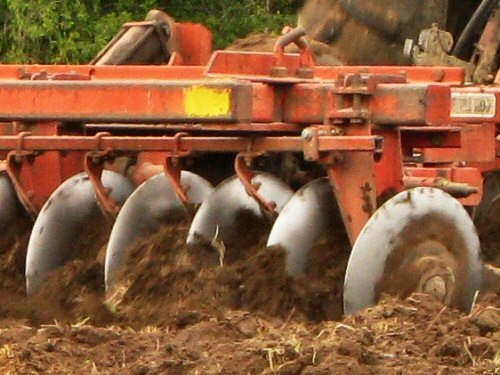
A chisel plow is the first implement used in preparation for spring planting after the ground has lain fallow all winter. Fallow ground usually has a hard crust that a disc plow could only barely scratch the surface of until a chisel plow prepares it for the next step. The chisel plow has huge metal chisels that can sink deep into the ground and rip the stony surface crust open.
After the chisel plow is used the ground is ready for the disc plow.
I was a young warrant officer in the United States Army. I was also a military instructor pilot. This is a little embarrassing, but when God raked that chisel plow through my cold, stony heart I was reduced to tears. My heart had been prepared to where God could now speak to me and find out what kind of decision I would now make.
Peter also told me that I could never expect a relationship to be blessed and workout unless I got truly right with God first.
When Peter was done with me I went and knelt in the chapel to pray. God came and spoke to me clearly. It wasn't audible, but I heard His voice almost as if it were. This is the conversation we had:
"David, you think you're alright, but I'm telling you there is nothing right about you. Especially with the things you have been holding to lately."
My response, "I know I'm not no saint, but who is in this day and age?"
"David, if you want to be alright, it is time for you to start seeking My son Jesus with your whole heart, soul, and mind. If you don't want to do that, then you just need to go to the devil and know who you belong to. Cause I don't want anything to do with you, and don't you ever feel good toward Me again."
"Whoa!" I thought. Those were strong words. I loved straddling the fence feeling good toward God and delving in the ways of the world mostly in promiscuity and drunkenness. God was telling me to pick the side of the fence I wanted to land on. He had brought me to a serious point of decision. I could no longer have it both ways with what he was telling me. He would no longer allow me to straddle the fence!
God then took me on a tour of the dark side if I chose not to follow Him and start seeking His son Jesus with my whole heart. He said, "If you're a little short on money, I've given you a smart enough brain where you can figure out how to rob a bank and get away with it."
I liked money as much as the next guy, but I'd never been interested in robbing banks. It was like God was telling me that if I didn't want Him it just no longer mattered what I did or what level of wrong doing I took it to.
Next He told me, "If you want to sleep with a woman and she tells you no, take it anyhow. What's she gonna do?"
"Whoa!" I liked sleeping with women, but I didn't want to rape any of them. God seemed to be telling me that my righteousness was like filthy rags compared to His and if I didn't want Him why have any semblance of righteousness.
I believe most people sin through ignorance. They just really don't understand the true nature of sin or its consequences until they or someone they love suffers from the unrighteousness they engage in. Then there are a few who truly have black hearts and don't care about the degree of depravity they engage in or the harm it causes others to experience.
One thing I knew was that I liked feeling good toward God no matter how much I liked my current lifestyle. God was telling me to make up my mind because He would no longer tolerate me having both. I took a hard look at the dark side. I have a personality that is subject to the power of suggestion. I figured that if I rejected God it wouldn't be long before I might find myself engaging in those things He had shown me. I also had enough sense to know that if I did pick those seemingly worse behaviors up I probably wouldn't last too long even though He told me I had a smart enough mind to figure out how to get away with it. I didn't think that was a good side of the fence to jump off on no matter how much I enjoyed and liked my current debauched lifestyle that the world seemed so quick to champion.
I made my decision. I wanted to go with God no matter the cost. I made a commitment right then and there to choose God and start seeking Him with all my heart, soul, and mind. I also invited Jesus to come into my heart and help me on my journey.
There is no doubt in my mind that was the moment I was born again. God had a big job ahead of Him to clean me up, but He is fully capable. I didn't have an overnight transformation, but I would begin heading in the right direction from that point onward, and God along with His son Jesus would help me along the way cleansing me from the sin I previously sought out and enjoyed so much.
"Doing wickedness is like sport to a fool, And so is wisdom to a man of understanding." Proverbs 10:23
It was a life changing decision for me that I have never regretted.
Lord willing there will be more tall tales from both before and after my born again experience. If you have a personal relationship with Jesus I pray you rejoice in my unworthy redemption. If you don't have a personal relationship with Jesus I pray this story stirs your soul and makes you curious. Jesus desires for you too to make it through the narrow gate. Simply ask Him to help you on the journey and I believe you will find Him faithful. He is no respecter of persons. If He can do it for my undeserving self, He can do it for you. I've been on both sides of the spectrum and I know from personal experience that it is good over here. Come and taste and see!
"Behold, I stand at the door and knock; if anyone hears My voice and opens the door, I will come in to him and will dine with him, and he with Me." Revelation 3:20



 Posts
Posts